

There are some diseases, known as “infectious diseases,” that you can catch from somebody or pass onto other people without knowing it.
This section explains about the infectious diseases of tuberculosis and HIV.
It also explains about public health crises such as COVID-19.

        Tuberculosis is a disease that can be cured with the right treatment. HIV is a disease in which good health can be recovered by medication. You can ask your employer for the leave and support needed to recover.To ensure that your condition does not worsen and that you can keep working, if you have any concerns, see a doctor and get tested.
Your privacy at the hospital will be protected.

2. 1. I have a bad cough. What kind of illness might I have?

• Coughs can have various causes.
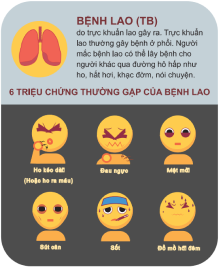
• If you have symptoms such as a prolonged cough, blood in your phlegm, low-grade fever, weight loss, or listlessness, it may be tuberculosis. In that case, you should be examined by a doctor immediately.
•If you have a fever or other symptoms that might suggest COVID-19, please contact the clinic or hospital in advance before visiting  a clinic or hostpital.

COVID-19, influenza and tuberculosis both cause coughs, shortness of breath, fever, and listlessness.The biggest difference is the speed of progression of the disease. With tuberculosis, only one or two people for every ten people infected develop symptoms, and it often takes from several months to around two years for symptoms to become apparent.However, with COVID-19, symptoms start within a few days of infection. In both cases, once symptoms appear, be quick to get tested and be seen at a hospital.

2. 2. What will happen if I am diagnosed with tuberculosis?

•Tuberculosis is a disease that can be cured with medicine.

•  The usual treatment period is 6 months, but it can be longer.
• If the patient has TB of the lungs and is likely to infect others, 

he or she may need to be hospitalized temporarily.
• Medical expenses are partly supported by public funds.

• Be sure to comply with the instructions of the doctors at the 

hospital.
• If your symptoms are mild, once you start treatment, 

you will be able to work normally while being treated as an outpatient. 

• There is no need for you to go home to your country.

Learn more about Tuberculosis

In some cases, there are almost no symptoms of tuberculosis. Also, even if symptoms disappear after taking medication, it does not mean that the patient is cured. If you stop TB treatment halfway through, you may develop drug-resistant TB (drug-resistant TB), which cannot be cured. Once you start taking the medication, you should continue to take it every day until the confirmation of cure.
In some cases, TB infection may be diagnosed before the patient becomes ill (called latent TB infection). In such cases, medication can prevent the onset of the disease.

A patient with severe plumonary TB may infect others, but ususally the patient will no longer be contagious after 2 weeks of treatment.
There are also types of tuberculosis (called latent tuberculosis) that have no symptoms and that there is no possibility of infecting others.
If treatment is needed, you can prevent symptoms from appearing by taking medicine.

[List of Consulting Services]

If you are not emitting the bacteria from your body and you are receiving the correct treatment, in many cases, you will be able to keep working without infecting other people.

[Tuberculosis]

Tuberculosis Telephone Consultation Service of The Research Institute of Tuberculosis Department of Programme Support Vietnamese Tuberculosis Telephone Consultation Service Tel: 03-3292-1219 (Every Tuesday, 10:00 – 15:00)

* Program Support Department, Tuberculosis Research Institute

03-3292-1219 (consultation in Vietnamese)
Both services are free, and your privacy will be protected.

Find out more!

Osaka / Tuberculosis (English)

2. 3. I am worried that I might have contracted HIV.

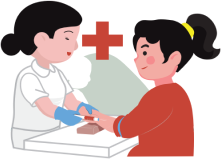
If you are worried that you might have contracted HIV, get tested as soon as possible You can also be tested for free at a public health office.

2. 4. What should I do if I am diagnosed with HIV?

Currently, if you start treatment for HIV as soon as possible, you should be able to live your life in almost the same way as before you contracted it.
Even if your HIV test is positive, as long as you continue treatment properly and maintain your health, you will not lose your job and your visa status will not be affected.

HIV is a disease that is not easily transmitted other than by sexual contact.Just because you have learned that you have HIV, you do not need to make sudden changes to your lifestyle and involvement with the people around you.
There is no need to inform the people around you of your test results. However, you should inform any sexual partners.

To people who have been diagnosed with HIV

If you are being treated for HIV in Japan, HIV medicines are very expensive.You can apply for assistance with medical expenses for costs that are not covered by health insurance.
Applying for assistance requires detailed test data and complicated procedures, so if you do not understand, consult a hospital that specializes in HIV or an NPO.
You will receive an explanation at the hospital where you were diagnosed, so be sure you have a good understanding before undergoing treatment.

[Detailed Information in Japanese]

Chugoku-Shikoku Regional AIDS Center


2. 5. I have heard that a certain infectious disease is spreading in Japan, and I am worried about going there. Where can I obtain information and plan what action to take?

Check the information at the public health office, foreign ministry, and embassy in the individual countries.
It is important to have a routine interest in news about Japan and to gather the latest information. However, because there is a lot of wrong information, first refer to information from public organizations.
Infectious diseases prone to outbreaks in Japan such as measles, rubella, and influenza can all be prevented with vaccines.
If you have any worrying symptoms, go to a clinic or hospital nearby ➡ “How to receive a medical consultation”

[Reference Information]

Immigration Services Agency

Find out more!

What is a public health state of emergency?
As you all experienced with the COVID-19 pandemic, amid the progress of globalization, public health emergencies have become a major problem both nationally and globally.Public health emergencies can cause outbreaks of disease, natural disasters, serious injury to people, and loss of life.A certain situation will become a state of emergency when society is no longer functioning well enough to take countermeasures against the situation’s impact on health.
The following are some examples.
• Outbreaks of infectious disease; influenza pandemic, measles, avian influenza, COVID-19, etc.
• Natural disasters’ impact on health: earthquake, tsunami, flood, typhoon, etc.
• Accidents that cause many casualties: Airplane crash, train derailment, etc.
• In Japan, outbreaks (increase in the number of people infected) of measles, rubella, and influenza have been reported. When there is an outbreak, measures to prevent infection (washing hands, wearing masks, etc.) and vaccines are beneficial.
Regarding influenza, there are outbreaks every winter in Japan, so in some cases, the company may subsidize the cost of influenza vaccination.
If a public health emergency occurs, it is important to gather information from the Japanese government, local governments, news, and other sources.